Reading list
An informal reading list on the convergence of three threads: artificial intelligence, conflict resolution, and the social science (and science fiction) of how people cooperate. Some of these books are foundational, some speculative, a couple just a good time. The quotes are from the books themselves.
Conflict, and how we get unstuck

High Conflict: Why We Get Trapped and How We Get Out
“In healthy conflict, there is movement. Questions get asked. Curiosity exists. ... In high conflict, the conflict is the destination. There's nowhere else to go.”
Game theory and the evolution of cooperation
That adversaries can cooperate is a formal result, not a hope. These are the works that established it, and the one that marks its limits.

The Strategy of Conflict
“The power to constrain an adversary may depend on the power to bind oneself; that, in bargaining, weakness is often strength, freedom may be freedom to capitulate, and to burn bridges behind one may suffice to undo an opponent.”
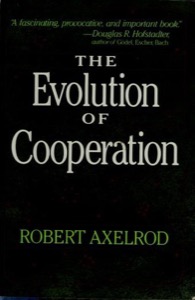
The Evolution of Cooperation
“What accounts for TIT FOR TAT's robust success is its combination of being nice, retaliatory, forgiving, and clear.”
Playing with Reality: How Games Have Shaped Our World
“By simplifying and abstracting reality, games with their ever-seductive appeal can be too easily mistaken for reality itself. Human decision-making is not often rational.”
Negotiation and fair division
Getting to Yes: Negotiating Agreement Without Giving In
“Like it or not, you are a negotiator.”

Fair Division: From Cake-Cutting to Dispute Resolution
Information and collective intelligence
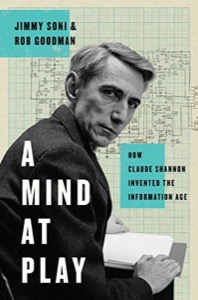
A Mind at Play: How Claude Shannon Invented the Information Age
“The fundamental problem of communication is that of reproducing at one point either exactly or approximately a message selected at another point.”
Claude Shannon, 'A Mathematical Theory of Communication' (1948)
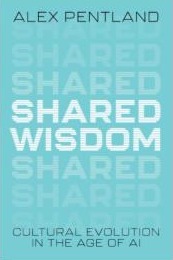
Shared Wisdom: Cultural Evolution in the Age of AI
“The core problem wasn't the AI itself but the inadequate models of society available, models that failed to capture complexity and dynamism and suffered from misinformation, bias, and lack of inclusion.”
Imagined futures
Science fiction where mathematics, prediction, and machines reshape society, from a galaxy steered by the statistics of mass behavior to lives run by swarms of personal agents.
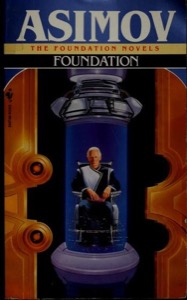
Foundation
“Violence is the last refuge of the incompetent.”
Salvor Hardin

Accelerando
“She still believes in classical economics, the allocation of resources under conditions of scarcity. Information doesn't work that way.”
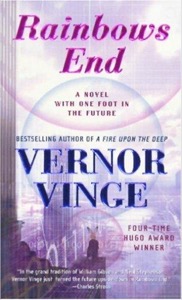
Rainbows End
“In the modern world, success came from having the largest possible educated population and providing those hundreds of millions of creative people with credible freedom.”
For younger readers (and the rest of us)
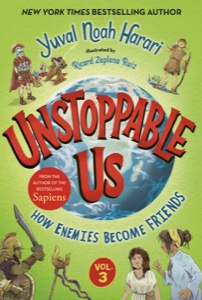
Unstoppable Us, Volume 3: How Enemies Become Friends
Nothing here is required reading; the books are gathered because the questions they ask keep meeting in the same place. Links go to Goodreads and Amazon as plain references (no affiliate tags) so buy wherever you like, your library or local bookshop included.